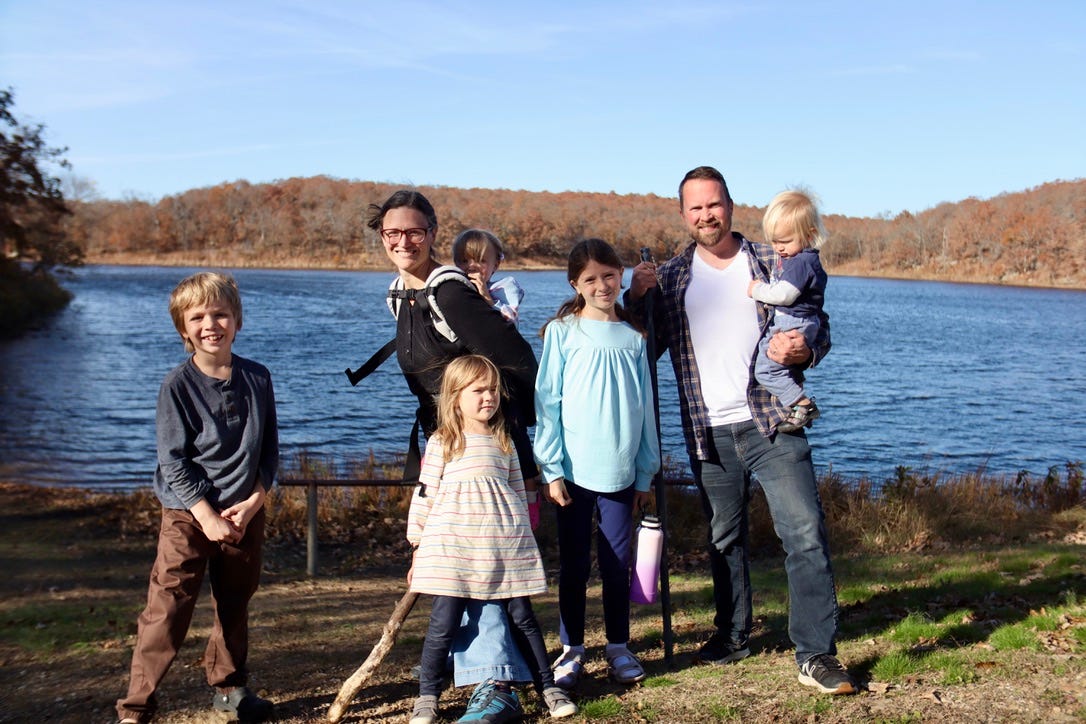
For better or worse, collective bodies are largely defined by who sits atop them. College presidents largely influence the identity of the college they serve. Likewise, the primary personality informing the identity of the church is Christ Jesus. Even so, as Paul said, he imitated Christ, and he expected others to imitate him. If a pastor is to be imitated, he must be known. I don’t intend to talk about myself a whole last as pastor. This is just an exceptional time, right at the beginning of my tenure here. It is appropriate that I make myself known. I broad sketch of my life, and my walk with Christ, is warranted. I hope it is a blessing to you.
I was born in Lubbock, Texas in 1984, the first of three boys born to a United Methodist liberal clergy couple. I was baptized as an infant by a United Methodist clergyman. My first few years were spent growing up in a humble and simple household. We didn’t make a lot of money. My folks each served small town rural churches in West Texas. We itinerated as a family every couple of years.
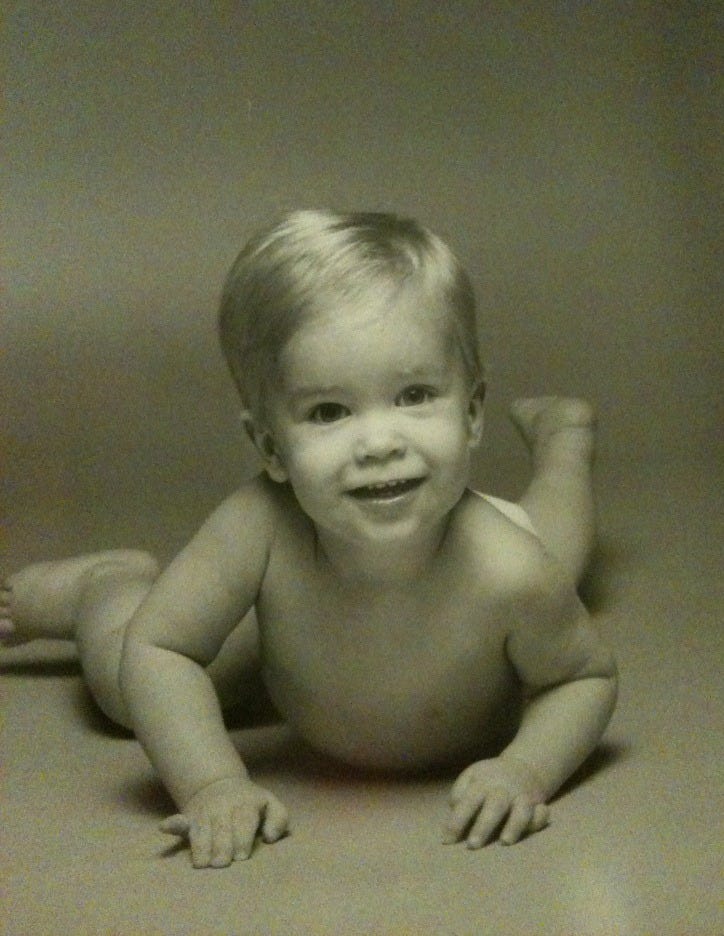
My folks moved us to the Oklahoma Conference in 1991. The increasingly conservative disposition of the West Texas Conference had made them unhappy, so we moved away from my father’s side of the family in Texas and close to my mother’s side in Oklahoma. My maternal grandfather was also United Methodist clergy. My family continued to itinerate, moving to larger churches over time. I was confirmed in the faith in Claremore, Oklahoma, a suburb of Tulsa. My indoctrination into the faith of Jesus Christ was more characterized by the Wesleyan Quadrilateral, a concept coined by Albert Outler and then disowned, than by the scriptures.
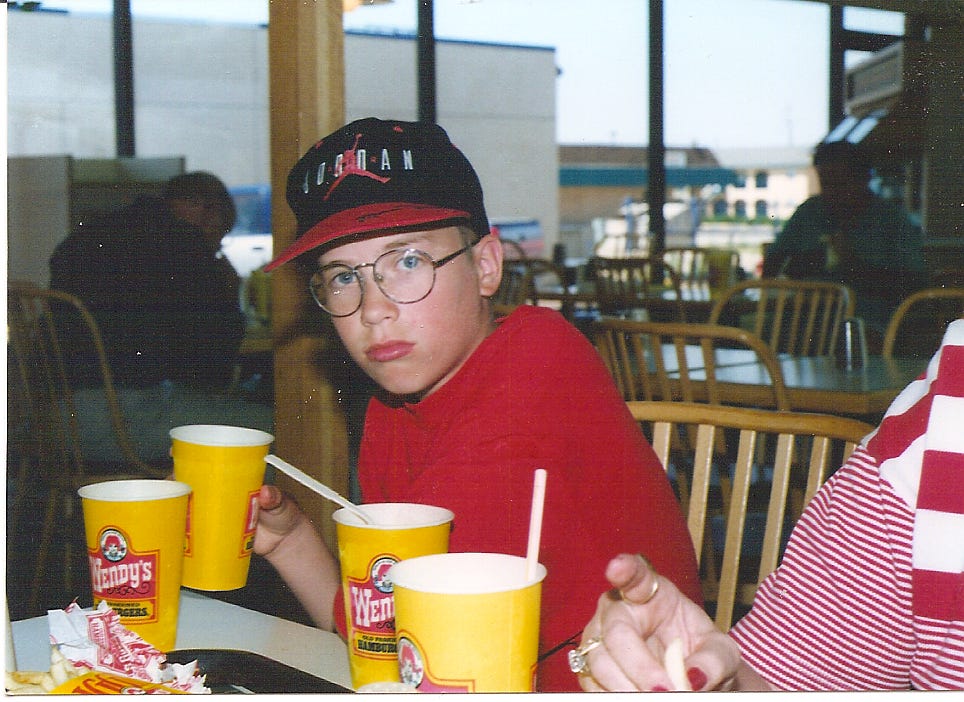
My family moved to Tulsa, where I attended high school at a reputable magnet school named after the once-famous (for good reason) Booker T. Washington. My parents each served at different churches. I had to attend one. Every Sunday morning my brothers and I would wake to the smell of cinnamon rolls.
Church was a social club for me. It was the place I went and hung out with my friends. The youth program talked about Jesus, but only in an obligatory fashion. I and the other youth were more concerned with dating, with drama, with social status. Even the adults often seemed to think church was a place to show off their fashionable or form-fitting clothing. So far as I was concerned, it was a worldly place that talked about Jesus.


It isn’t surprising, then, that I graduated high school with little understanding of the Christian faith. I knew plenty of things about it, but anything resembling scriptural Christianity stunk in my nose. Any way of life marked by self-denial, pursuit of holiness, war against the desires of the flesh, was a gross imposition upon what I thought to be good and natural desires. The conservative worldview, based on constraint and realism, was backwards and borderline evil, to my mind. Conservative extended family members were resented and disdained. Many evenings ended with turning on Jon Stewart’s Daily Show and laughing at the inane bumbling conservatives. How could these people possibly take themselves seriously? They were undeniably ignorant, bent on dragging the world back to the Stone Age. They were on the wrong side of history. Good liberals like me had held them at bay, advancing the cause of liberation and freedom, and would succeed in the end. We were on the correct side of history.


After graduating high school in 2003, I attended a United Methodist liberal arts school in Arkansas called Hendrix College, where I fell away from the faith entirely and fell headlong into sin. I had already engaged in much immorality in high school and, having left the accountability of a family, now pursued the desires of the flesh without restraint. The Lord saved me from ever having gotten involved in gambling, but other vices fell hard upon me. Sexual immorality, in particular, ruled over me for a decade. A large portion of my life was spent pursuing unholy relationships with women, in situations involving booze and drugs. I was a creature of this world, with a track record of shame and sin. I unreservedly called myself an atheist. I told anyone who would listen that Christianity is just a myth made up by people who could not deal with the reality of their inevitable death. Yet on dark drunken nights, when I was overcome by anomie and emptiness, I would stumble over to Marsh Chapel, where a little prayer room was kept unlocked, where I would open up the available 1989 United Methodist Hymnal, singing familiar hymns from my younger years.


King Solomon in Ecclesiastes maps out the places he searched for meaning and happiness, eventually calling all of them vanity of vanities. That was my life. I gave myself to sin, and sin answered with emptiness. I studied religion and politics, not because I wanted to work in either field, but because they were interesting to me. When it came time to graduate in 2007, I was one of a few religion majors asked to speak at my baccalaureate service. I warned those coordinating the service that I wasn’t a believer. They shrugged.
So at the service, I had nothing planned to say. I remember the young lady who spoke immediately before me said a series of sappy trite things that were obviously false. I knew that we had spent too much time and money to end with something so unserious, so when it came time for me to take her place, I resolved to say real things. And that was the first time I recall feeling my words carry spiritual weight. I was endowed with authority, with power, from a spiritual Source. A weight came upon me. I spoke in a voice I didn’t entirely recognize.
“What was that?” my parents later asked me. “I didn’t know you could talk that way. Is that what you really think?”
“I don’t know,” was my answer. I hadn’t really made room for such a thing to happen. It took me a few days to process. I eventually decided that I needed to spend a significant amount of time delving into Christianity, exploring what substance might actually be there. I had spent undergrad studying the world religions, the theory of religion, but now I would actually stare Christianity in the face by attending a seminary.
I had no desire to enter into ministry. I just wanted to say that I had really searched this thing out. It was too late to enroll that year, so I spent a year in Little Rock, Arkansas, working for various nonprofits and getting a lot of real world experience. I was still very much a creature of the flesh, still living outside of the church and of the Christian faith.
I chose to attend Boston University School of Theology, which calls itself the ‘school of the prophets.’ I knew that I wanted to better understand poverty, how to work with poor people, how our current systems around the poor worked. An admissions officer assured me a vast infrastructure had been built there to help me to do just that. She was lying, it would turn out. All the work I ended up doing was initiated by me.
I started my tenure as a seminarian as a progressive liberal. I was still confident in my being on the right side of history. I was finally going to explore the depths of the liberal theological tradition, with which my elders in the faith were so engrossed. I would be initiated into the mysteries of the forward movement of God among humanity. I would be able to convey how it is that God blesses myriad lifestyles, myriad desires, various cultures and practices.
Yet as I began my studies, I pretty quickly found that this is really nothing there. I had read some of the ancients at this point for my philosophy classes in high school. I knew what substance felt and sounded like. It turns out liberal theology has no substance. It has a Marxist end goal, which then uses theological language to facilitate. But there isn’t really much beyond the human ego to support or maintain theological liberalism. I grew increasingly dissatisfied.
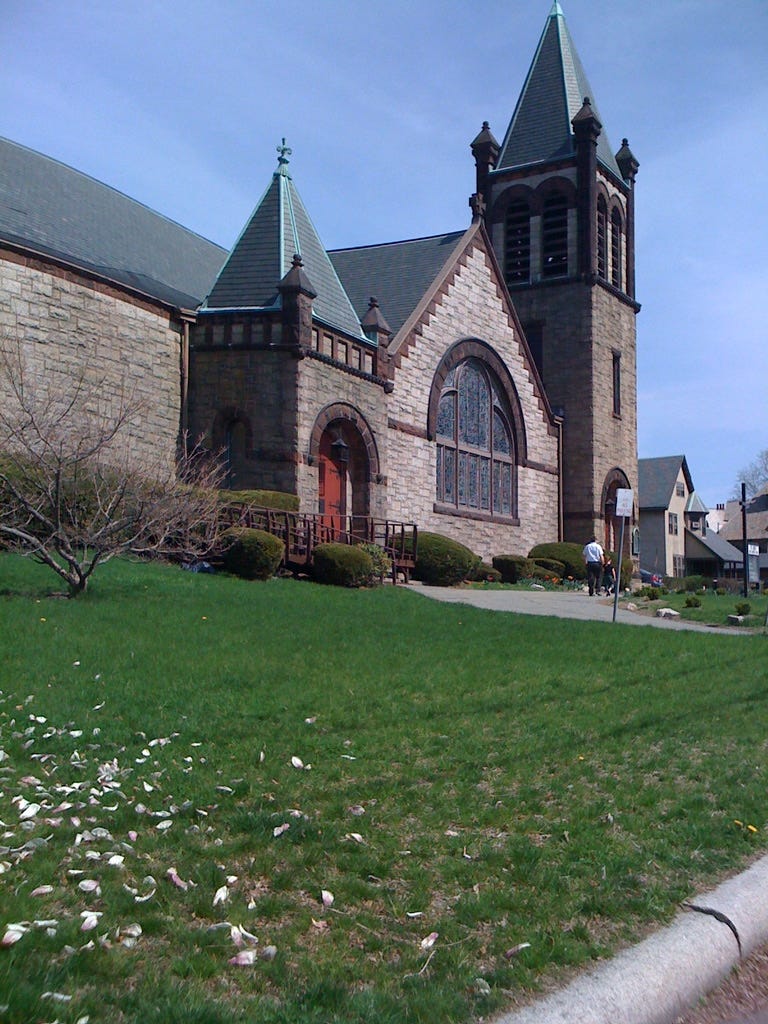
Meanwhile, the seminary degree still required that all students take classes on the Old and New Testaments of the Bible. They were, of course, instructed by professors who designed the classes to mock the plain meaning and understanding of the scriptures. But it was here for the first time that I actually read the Bible in its fullness. This changed me. It, the Bible, was self evidently true. And as I heard my professors and peers straw man what the text said, I found myself increasingly in the position of calling out their lies and misrepresentations.
More, when I finally took my Methodist History and Polity course, I came to see that there was actually a time when the church was faithful, when the Spirit was pleased to bless and prosper an entire movement of people aimed at scriptural holiness. I read John Wesley’s sermons for the first time, and I was gradually converted. It was both an assent of the mind and of the heart. The Christian faith was increasingly revealed as true to my mind, and my heart conformed to the truth. But only gradually.
By the time Sara Beth met me, I was known in the seminary as troublesome student, often taking issue with professors and asking uncomfortable questions at student body meetings. She wasn’t initially drawn to me, but Boston is a miserable city and our school was, as I described, empty. One night we both happened to be at the same bar. When a seat opened up next to her, I approached and took it. She liked me. When it came time to leave, I walked home with a group of guys from the table we had been sitting at. I couldn’t help but talk about that Sara Beth and how much I liked her. It turns out she had been on a blind date. The guy whose seat I had taken was her date. He was on the walk home with me, listening to me talk about his date.
Sara Beth and I were still very much creatures of the world, and we dated as such. And though that year of courtship was sweet, we have come to know that our way of pursuing marriage was wrong.


The truth of the Christian faith in some beginner sense moved me to pursue ministry. My parents had recently divorced, so I had no desire to return to Oklahoma. Instead, I accepted an invitation to serve in the Oregon-Idaho Conference, where they connected me with a three-point charge. I graduated in the Spring of 2011, spent the Summer in Boston with Sara Beth, then began pastoral ministry that Fall in the High Desert of Idaho. Sara Beth and I were married a year later, and we became a pastoral unit.
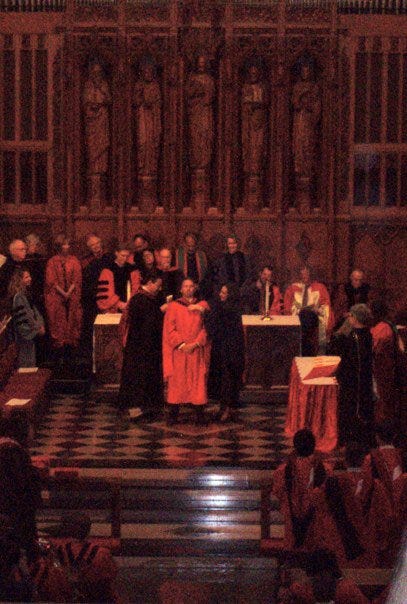
I initially entered ministry for the wrong reasons. I wanted to affect change in the world. I wanted to help the poor, call the powerful to account, mobilize people to collective action for the mutual betterment of our society. I figured that wielding the fear of God as a pastor would move people to do as they ought. Having done nonprofit work prior to seminary, I had seen how inconsistent and noncommittal people could be. Perhaps the church could better motivate people to do as they ought.
I came to find quite early in ministry that folks generally did not appreciate being challenged, being expected to take the Bible too seriously. I was tacitly expected to be grateful for anyone to show up or give the smallest modicum of lip service to the faith. I served the Lord for four years in Idaho, preaching at three churches every Sunday, facilitating Bible study, children’s programming, and adult discipleship at each of the three midweek. Sara Beth was a big part of my ministry at that point, joining me for everything I did. Given the hardheartedness of the people we were serving there, we chose not to begin a family. When it became clear that the denominational structure above me was also hostile, we chose to leave. I went home to Oklahoma.


I was given a two-point charge by a DS who remembered me from church camp. My initial crisis came within the first month, when a member of the church took exception to some of the planning around her father’s funeral. When all was said and done, she apologized and thanked me for what she said was a very nice service, but when she got offended initially, she started calling around to different people in the church to try to get them upset, as well. Church leadership told her that there wouldn’t be any drama like that. When we learned that leadership had defended me, we chose to begin a family. Ever since then, we have had a baby every two years. We anticipate our sixth this July or August. The Lord has prospered us.
My sanctification has been a slow process. My flesh had reign and rule over my body and soul for decades. I wish I could say that the Holy Ghost immediately eradicated sin and gave me a new identity in Christ all at once, in an instant. It didn’t go that way for me. Rather, the seed was planted very early in the sealing of the waters of baptism, the washing in the Word in my weekly exposure to the scriptures in worship. Yet my life of sin crowded out any fruit that would have been borne. It was only through this gradual truth-seeking process that I was given freedom from sin and the power of righteousness. And I have indeed gained these things in great measure, in ways that are real and undeniable. People who once knew me no longer recognize me in many ways. I have a true sense of Christ in me, a constant comfort of the Holy Ghost. This has been my strength in times of trial.
And there have been many times of trial. The two most sanctifying phenomena in my life have been marriage and ministry. I’ll talk about marriage more in the coming years. But ministry has been really hard. We live in a really confused time in which worldly forces have largely succeeded in compromising the hearts and minds of Christians across our nation. We Methodists are trying to serve Jesus in the midst of a movement that started so strong, ran so well, and then fell so hard into rank worldliness, as it eventually required for our local church alongside thousands of others to eventually split and leave. Yet even after we have left, our movement in the Global Methodist denomination still lacks the discernment to identify and distinguish between worldly and heavenly things. It is common to have churches full of people who have been in church all their lives but who know very little of saving faith. And they take great offense at the notion that they should be expected to be mature in faith.
After fifteen years of ministry, I have gotten to know a good deal about the religious landscape in which I serve. I have had many intimate talks with hundreds of pastors. The church in America is not well. Local churches largely miss the mark, focusing on secondary and tertiary things while neglecting what is primary.
The nature of the faith and the church has required that I choose faithfulness over practicality at every turn. I speak the truth in love even when I know others cannot receive it. I refuse to pay homage to false idols. This has caused offense many times. It has been hard for me. I hate offending people. I love people and want them to like me. But I love and fear God more than men. I have to answer to him at the Last Day. I cannot bear the thought of trying to excuse myself by saying I chose to fear men more than him.
My later years of ministry have been compounded by the additional trials of Covid and disaffiliation. From the beginning of Covid, I sensed a great spiritual disease around what we were being told. I fostered an increasing suspicion of worldly authorities that are supposedly for the good of humanity. I did not mask myself, close the church building, or get vaccinated. I believe I have been vindicated in these decisions. At the time, nobody else around me was willing to vocally question anything or to insist on keeping the Lord’s house open. It was a time when I knew I was risking the livelihood of my family in order to practice my faith.


Disaffiliation was similarly risky. Out of frustration with the information landscape, I started a podcast, PlainSpoken, aimed at spreading helpful and accurate information about what was going on in The United Methodist Church. This was a risky decision that almost cost me my place in the pulpit. The bishop called me into his office in a very dire confrontation. I recounted the episode on a podcast segment a couple of years ago.
My efforts through PlainSpoken contributed to better conversations among hundreds of churches, especially in the US, but I was not nearly so effective as I would have liked. I have continued to produce content regularly, now hoping to purify and strengthen Methodism for the present moment. I believe our tradition has the best chance of reviving the church across the world, despite how mundane, and sometimes discouraging, things recently look.
These experiences in pastoral ministry have required that I engage my faith in ways that didn’t come naturally to me. At every turn, I have found that God’s ways are wiser than mine. At each juncture, there has been a worldly, practical, realistic decision juxtaposed against the decision of biblical faith. Time and again, I have learned that the way of faith was the right way.
My story isn’t one of clear communication with God. I don’t hear his voice as clearly as many. He hasn’t worked any obvious miracles through me, at least none that I am aware of. I do believe he has given me powers of discernment of spirits, but that topic is for another day. What I’m trying to articulate here is that my life has been marked with God’s validation and confirmation only after I have taken steps of faithfulness, which I later learned he was the author of. Each step closer to God was taken initially with uncertainty and doubt. Only after I stepped did the power and confirmation of God come. I cannot speak of a life of faith in which you can simply know God’s will in all things, living assured that you’re making no wrong decisions. Rather, I can model and teach a humble walking with God, an earnest seeking of his face, and quiet (or sometimes loud) confirmation of faithful decisions.
In the midst of various trials and heartbreaks of ministry, my wife and I have worked to make our home a heavenly place. We have a happy and holy marriage. Our children are healthy, happy, and increasingly holy. Our home is a place where laughter, singing and prayer to God, are often heard. Our private devotional life is rich and blessed. God has prospered us in every way. We believe he has positioned us to teach others how to do the same things in their homes. We are dedicating our lives toward just that.
More than a year ago, the Lord started communicating in an increasingly clear fashion that the Rickmans would need to end our decade-long tenure in Oklahoma. I wrote an article about discerning the Lord’s will in the midst of all that. He prepared a place for us here in Yazoo City, where a chemical explosion met us for our visit and then a historic ice storm when we moved. Satan is moving, but the Holy Ghost is more powerful. I aim to spurn the former and serve the latter in whatever time the Lord gives me among the saints in Yazoo City..
I hope you will join the Rickmans in making your household and your church a heavenly place, even more than in years passed. I hope you will receive my ministry, my house calls, dinner invitations, exhortations from the pulpit, admonitions as the leader, all in a spirit of brotherly care and concern. May the Lord bless our union and glorify himself in our midst. He is faithful. Let us likewise answer with the faithfulness and courage this moment requires.